
Address:
741 Martin Luther King, Jr. Drive, Cleveland, OH 44108Architect/Designer:
Berj A. ShakarianSponsoring Organization:
Armenian Cultural Garden Association
Dedication Date:
September 2010Contacts:
armeniancg@gmail.com
History & Design:
The Armenian Cultural Garden was developed by members of the Armenian community in Cleveland beginning in 2007. The garden assumes the form of the “vesica piscis”, a sacred geometric symbol representing Christ, and by extension, the conversion of Armenia as the first Christian nation in 301 CE. The landscape design was meant to match other historic areas of the Cleveland Cultural Gardens. Vinca Mynor (myrtle) is the ground cover, with juniper on the mound facing Martin Luther King Jr.Drive. Nuuk Ptantilla is planted in the flagpole area.
Armenian immigration to Cleveland began in the early 1900s, driven by employment opportunities. Immigration increased following the 1915 Armenian Genocide and later the Soviet Union’s collapse. A significant milestone in the local community was the establishment of the Armenian Apostolic Church in Richmond Heights in 1964. Today, Cleveland’s Armenian community numbers around 3,000.
Statuary/Busts/Reliefs/Monuments:
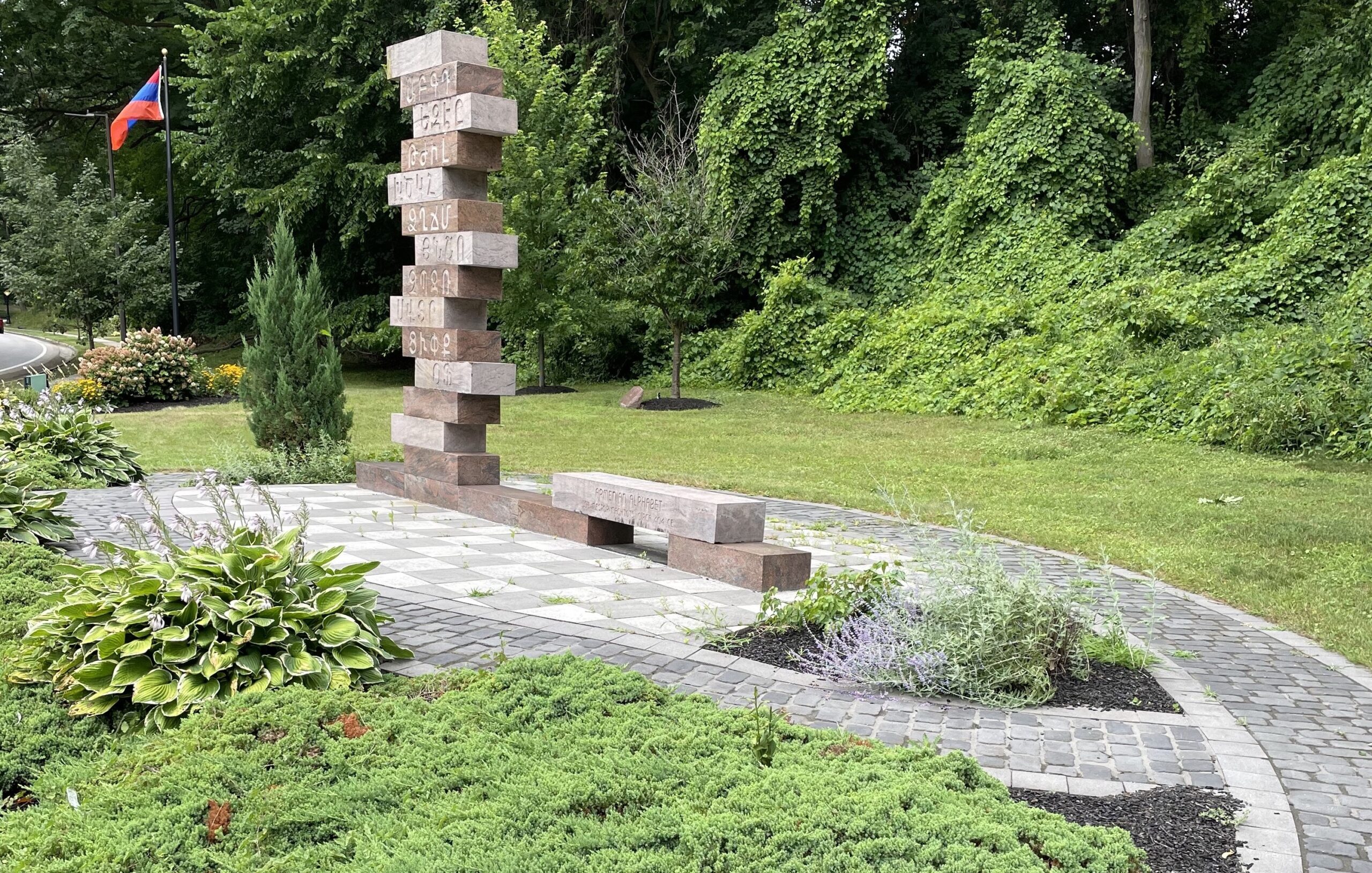
 The Alphabet Monument is composed of staggered granite blocks, representing both the turbulent history of the Armenian people and the ruggedly beautiful landscape of Armenia and the Caucasus Mountains. St. Mesrop Mashtots invented the alphabet circa 404 CE in order to translate the Bible into the Armenian language. The monument’s reverse side features the names of 33 important Armenians from antiquity to the 21st Century – from King Tigran the Great to the martyred contemporary journalist Hrant Dink.
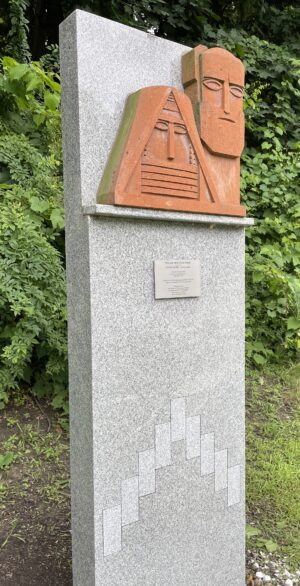
At the garden’s eastern end stands a replica of “We Are Our Mountains,” also known as Tatik-Papik, or Grandma-Grandpa. This monument symbolizes the ancestral heritage of Armenians in the Nagorno-Karabagh region. The original was carved into the mountainside by Sargis Baghdasaryan in 1967. This replica was made in Armenia by the artist’s son, Ashot, in 2020.
Credits:
Two of the founders of the Armenian Cultural Garden, builder Carlos Bozoklian and architect Berj A. Shakarian, donated their professional services as a gesture to their community. Bozoklian passed away in 2011, and a tree was planted on the site in his memory.