
Address:
880 East Blvd.Architect/Designer:
Architects B. Ashburton Tripp and Maurice Cornell; statues by Frank JirouchSponsoring Organization:
Dedication Date:
1935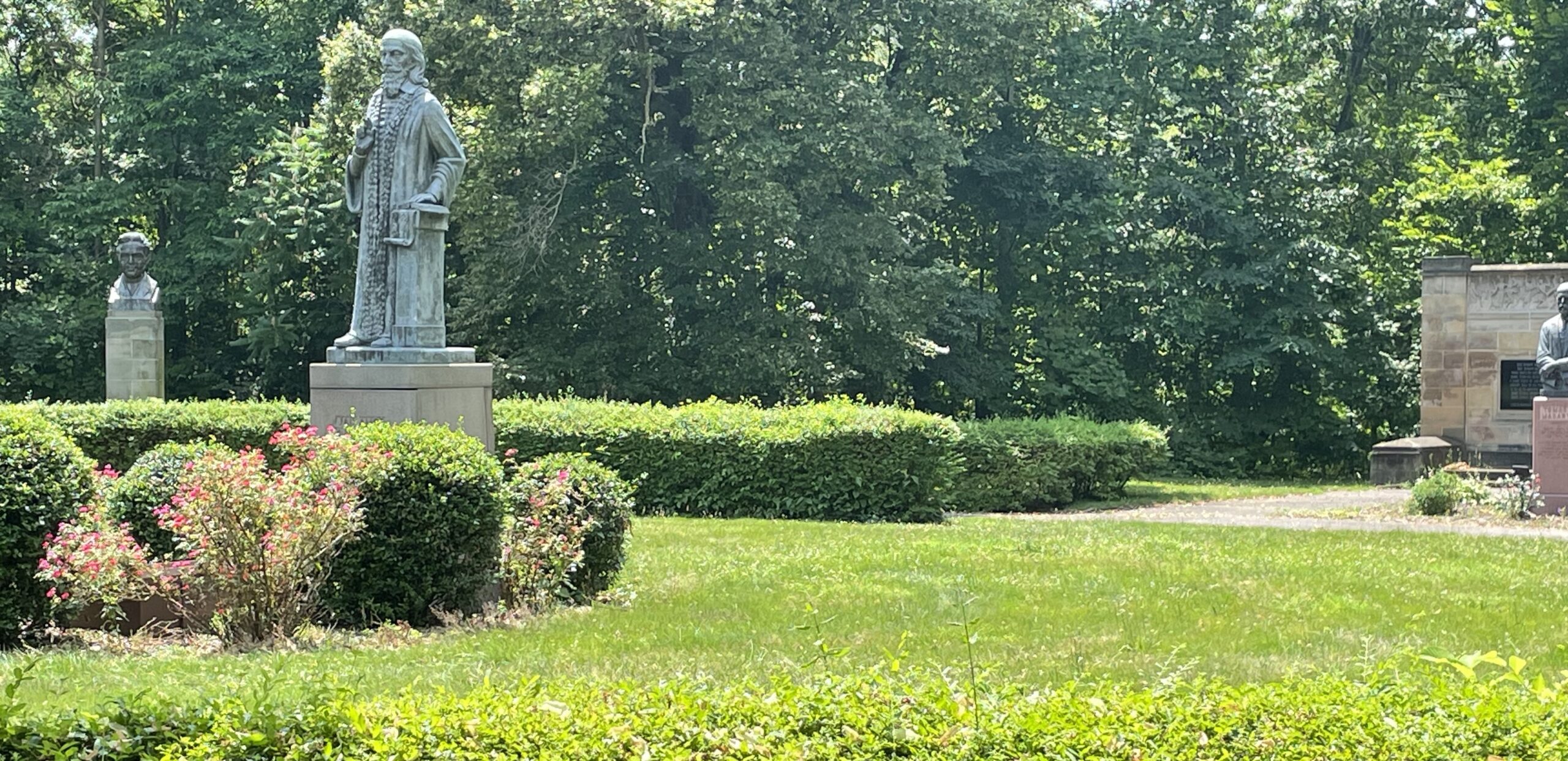
History & Design:
When the garden was created, there were 30,000 Czechs living in Northeast Ohio. Czech people first arrived in the mid-1800s, fleeing political persecution by the governing Austrian Empire. A second wave of Czechs came here prior to World War I as the political situation in Europe worsened.
The Czech Cultural Garden is circular in layout with two entrance monuments which declare the purpose of the Garden: ” A memorial to Czech parents who by their solid example set the high ideals of American citizenship.” At the Garden’s center is a statue of Bishop Jan Amos Komensky, a 17th Century reformer known as the father of modern education. Among the ideas he promoted were early childhood education and education for women, both radical ideas in the 1600s. The statue is illuminated at night with a solar-powered system.
The garden honors other leaders, such as T.G. Masaryk, the founder and first president of the former Czechoslovakia (now the Czech Republic). Also depicted are composers Antonin Dvorak, who wrote “The New World Symphony,” and Bedrich Smetana, known for his opera “The Bartered Bride.”
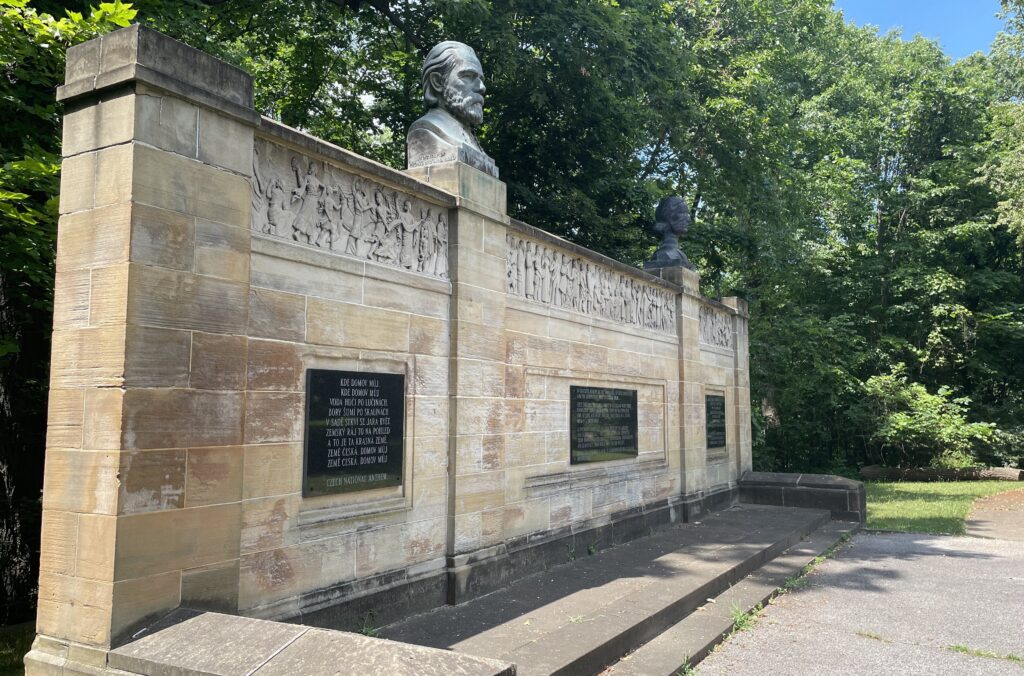 At the back of the garden, a monumental wall has a frieze illustrating the migration of Czech people in Europe from the eastern edges of the continent, such as present day Ukraine, to the central European area known as Bohemia. After World War I, this region became Czechoslovakia, and in 1993 the Czech Republic. In genealogy, the designation Czech and Bohemian are often used interchangeably.
Then former Czechoslovakian President Edward Benes and his wife planted a linden tree in the garden in 1939 as a symbol of the flourishing Czech culture in the United States.
Improvements to the Garden in recent years were made with the financial assistance from Holden Parks Trust, the Czech Foreign Ministry and the Victor Ptak Family.
Additional Information:
Contact Paul Burik at paulb54@centurytel.net.