
Address:
1170 Martin Luther King Jr. Drive, Cleveland, OH 44108Architect/Designer:
Herk VisnapuuSponsoring Organization:
Estonian Community of Cleveland
Dedication Date:
July 1966; remodeled and rededicated 2010History & Design:
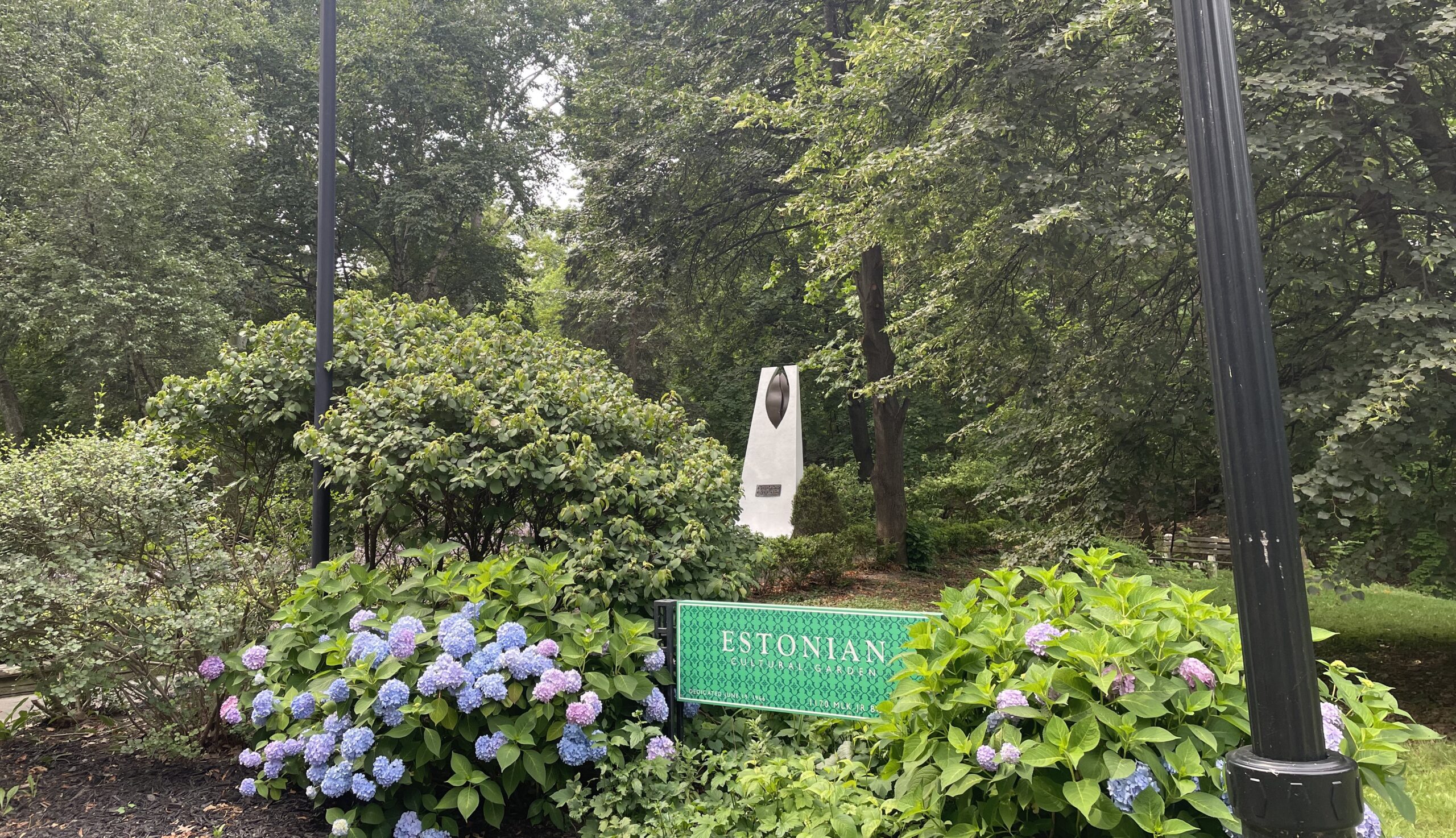
Designed by Oberlin College graduate and prominent architect Herk Visnapuu, the Estonian Cultural Garden 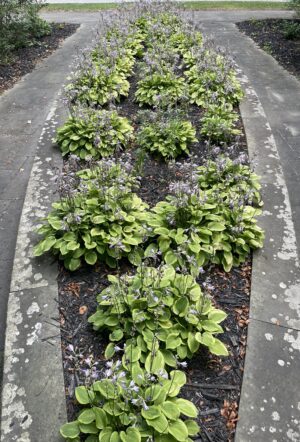 features an abstract sculpture with an inscribed flame at its center. The garden was built when Estonia was occupied by the Soviet Union, and it symbolizes the struggle for freedom over tyranny. Some considered the unveiling of the flame in 1996 a bold move by Cleveland’s Estonian’s community. Sculptor Clarence E. VanDuzer designed the flame. The inscription on the monument is from “Kalevipoeg,” an epic poem written by Friedrich Reinhold Kreutzwald (1803-1882) in the 1850s and published in 1861. Part of the broader awakening of nationalist sentiment in Europe, “Kalevipoeg” became a lightning rod for the creation of Estonian national identity: “But the time will come when all torches will burst into flame at both ends.”
September 2010 marked the completion of the remodeling of the Estonian Cultural Garden’s central area. A large, sandstone, boat-like planter surrounded by sandstone walks replaced the original walkway. The boat calls to mind the Baltic Sea, an important part of Estonian life. The text in a paver at the boat’s stern is also from the epic poem “Kalevipoeg.”
The Estonians are one of the smallest ethnic groups in Cleveland. Evidence suggests that the first Estonian settler, Geo. Tammik, arrived in Cleveland in 1903. About 35 more people were recorded as Estonian immigrants by 1945, with about 200 more arriving following World War II.
Contact Erika Puussaar for more information: epuussaar@oh.rr.com.