
Address:
820 East Blvd., Cleveland, OH 44108Sponsoring Organization:
Dedication Date:
1934History & Design:
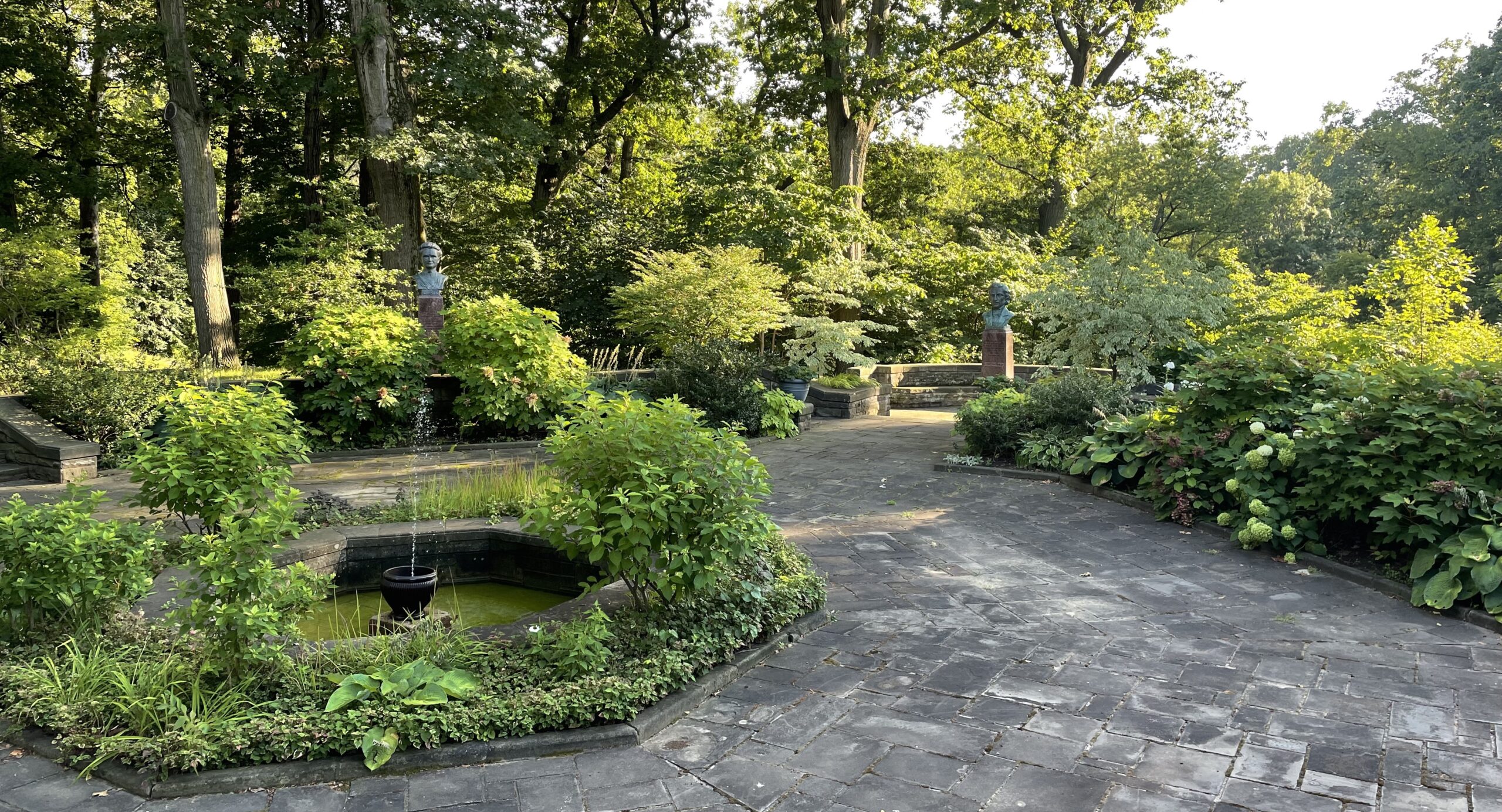
The Polish Cultural Garden began development in 1928, when Polish cultural organizations came together with other Cleveland ethnic groups to continue the expansion of the Cleveland Cultural Gardens on East Boulevard. At that time Cleveland’s Polish population was quite large after waves of immigration in the late 1800s and again following World War I. Poles first settled in Berea and then created a large settlement in Slavic Village on the city’s East Side. Other Poles settled in Cleveland’s Tremont area and just west of Doan Brook in the St. Casimir Parish area. Today, Americans with Polish roots are living and working throughout Northeast Ohio
The Polish Cultural Garden was funded through the federal Works Progress Administration in the 1930s and was designed as a sunken, hexagonal court encircled by granite walls. At the center of the court is a water fountain and pond, surrounded by beds of lush florals, grasses and hydrangea. Two Linden trees were transplanted from Poland and planted at the East Boulevard entrance to the garden. The garden also features busts of Poles known for remarkable contributions to the world in literature, music, performing arts and science.
Statuary/Busts/Reliefs/Monuments:
The six bronze busts surrounding the courtyard are:
 Pianist, composer and statesman Ignacy Paderewski and renowned pianist and composer Frederic Chopin, whose statues were dedicated in 1947;
Scientist and twice Nobel prize recipient Madame Marie Sklodowska Curie;
Nobel prize recipient and one of the Central Europe’s most renowned authors Henryk Sienkiewicz, unveiled in 1949.
Adam Mickiewicz, one of greatest Slavic and European poets of all time, unveiled in 1949.
The 16th century astronomer and mathematician Nicholaus Copernicus also stands in the Polish Garden, sculpted in granite.
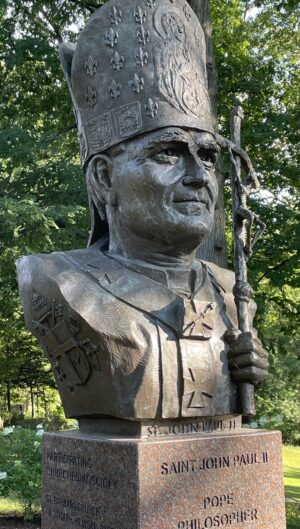
The most recent bronze statue dedicated in May 2019 is that of Saint John Paul II. The former Karol Jozef Wojtyla was the first non-Italian Pope of the Catholic Church in centuries. During his long tenure, he was known for international travel and outreach to different cultures and to youth. He was canonized in 2014. Saint John Paul’s statue was sculpted by renowned Polish-American sculptor Andrzej Pitynski.
Plantings:
The garden was renovated in 2015. Many plant species used in the renovation were selected by director Connie (Glazewski) Adams, who traveled to the Warsaw University Botanical Garden in Poland to research plantings viable in Cleveland’s climate.
Additional Information:
For more information about the Polish Cultural Garden, contact Connie Adams at connieadams2000@aol.com. Please like the Polish Cultural Garden Facebook page. Maintenance of the garden since is graciously provided by volunteers. If you would like to volunteer and/or donate to garden improvements, please go to our garden sponsor:
polishcenterofcleveland.org. The Polish Cultural Museum guided tour includes the history of the Polish Cultural Garden; You can visit all nine rooms of our museum virtually with your tour guide, Mr. Gene Bak, founder. polishcenterofcleveland.org