
Address:
Martin Luther King Jr. Drive, next to the Nord Family GreenwaySponsoring Organization:
Confucius Institute of Cleveland
Dedication Date:
1985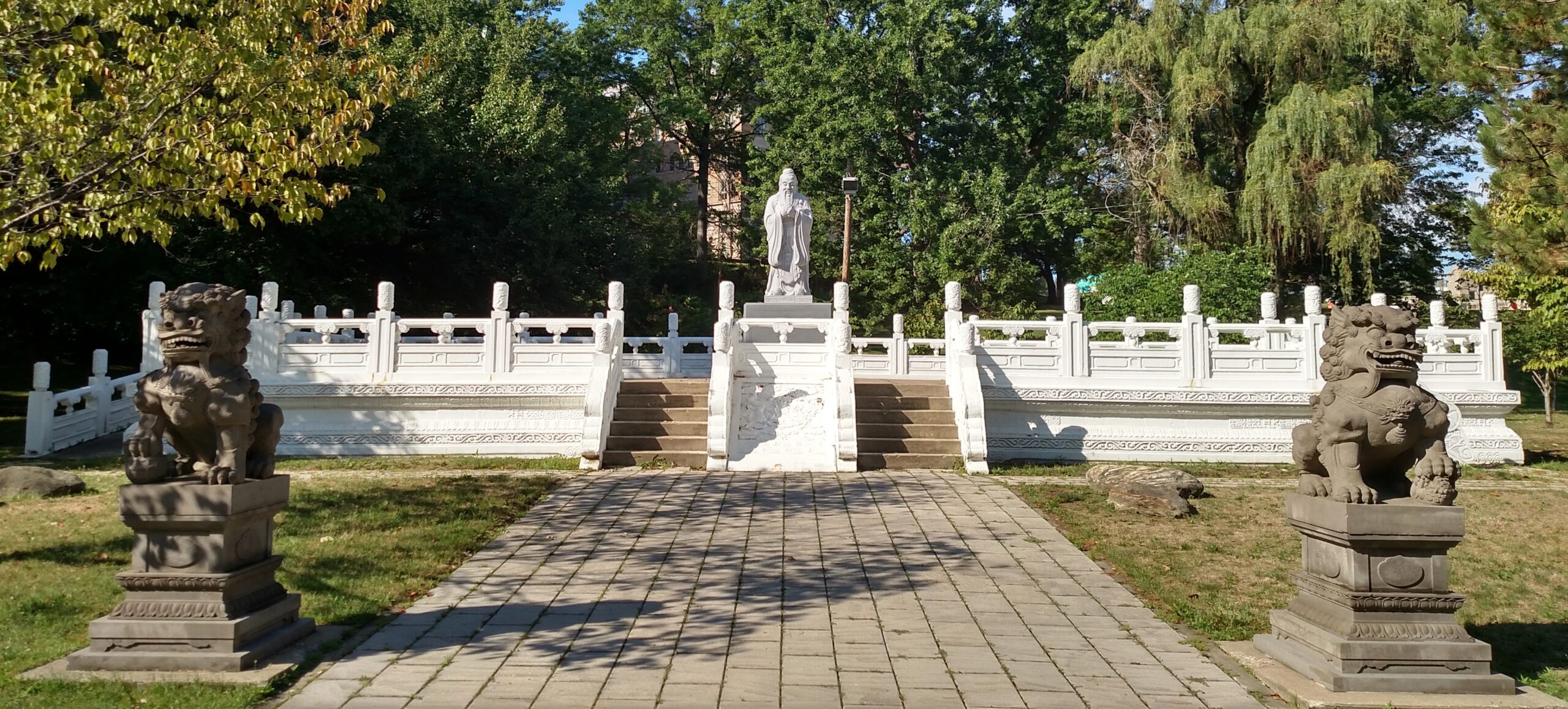
History & Design:
The Chinese Cultural Garden was a gift of the city of Taipei and its business community and was modeled after the Chinese Imperial Palace. Cleveland businessman Anthony Yen, founder of the Chinese Cultural Garden Association, led efforts to bring this design from Taipei to Cleveland as a gift of cultural exchange.
The Chinese Cultural Garden embodies the complexities of Chinese history in the 20th Century. After its civil war ended in 1949, China was split between the People’s Republic of China (which controls mainland China) and the Republic of China (which controls Taiwan and several surrounding islands.) The Chinese Cultural Garden is geographically separated from the chain of cultural gardens in Rockefeller Park, but Yen and architect Thomas Aung prioritized the placement of the garden facing the Cleveland Museum of Art, home to an extensive and famous Chinese art collection.
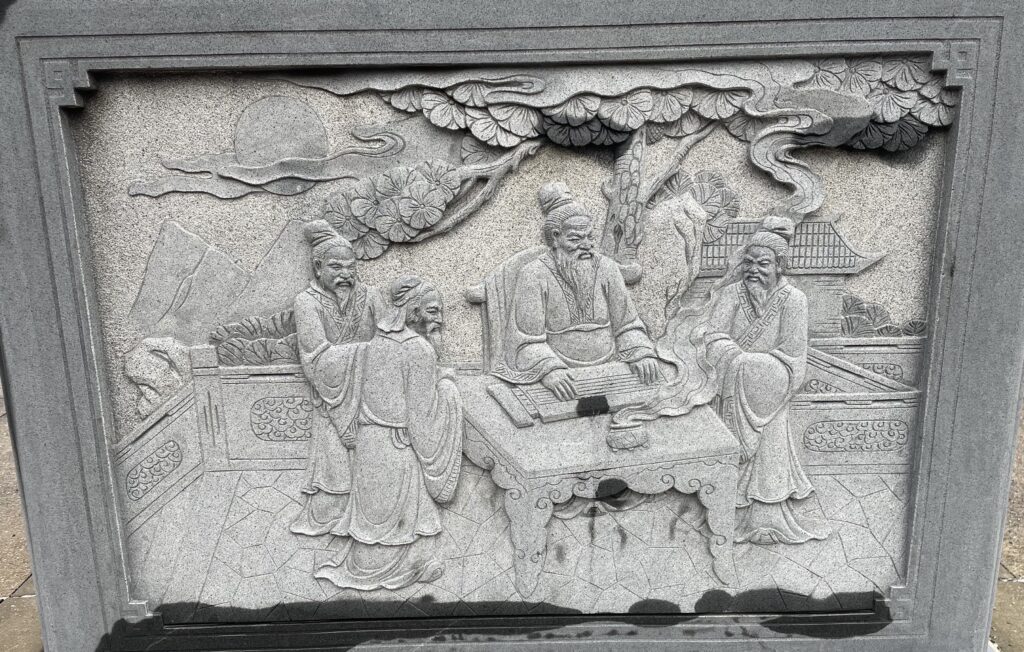
The garden has traditional Imperial Chinese architecture, including white marble railings and stone pathways designed to reflect harmony with nature. The entrance to the pavilion is flanked by two intricately carved Chinese dragons symbolizing strength and wisdom. The the focal point is a 25,000-pound granite statue of Confucius, a teacher, philosopher and political theorist who lived 551-479 BC. The statue was commissioned from Shanxi, China, and installed as part of a restoration effort led by Chinese-American entrepreneur Eddie Ni. The pavilion provides a peaceful space for reflection. Inscriptions of Confucian teachings honor the philosopher’s lasting influence.