
Address:
1160 East Blvd., Cleveland, OH 44108Architect/Designer:
T. Ashburton TrippSponsoring Organization:
Dedication Date:
1926History & Design:
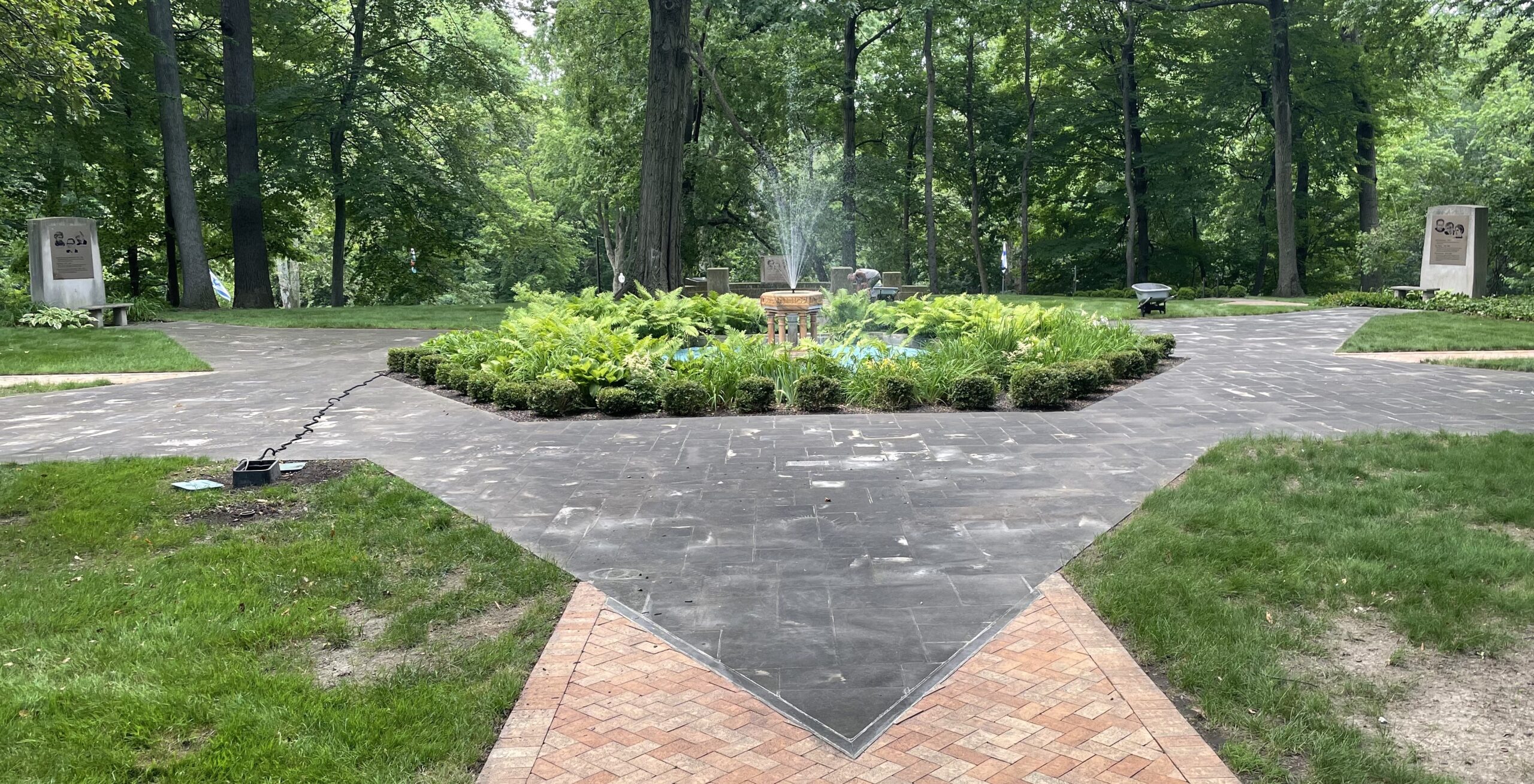
 The Hebrew Cultural Garden was the first to be built and dedicated after the the official formation of the Cleveland Cultural Gardens. It was the vision of Leo Weidenthal, the founder of the Shakespeare Garden (the first garden to be built) and publisher of the Jewish News. The Hebrew Cultural Garden, established before Israel became a country, recognizes Jewish cultural presence throughout the world. Jewish people began emigrating to Cleveland in 1837. By 1880 there were 3,500 Jews living in Cleveland. This number increased dramatically over the next generation: By 1925, about 85,000 Jews lived in the city. Many Jewish immigrants lived in the Glenville neighborhood, close to the Hebrew Cultural Garden. Today the Cleveland Jewish community is an estimated 80,000 people.
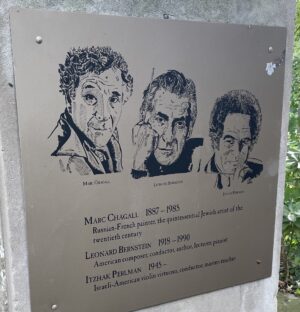
The garden was designed by architect T. Ashburton Tripp, who went on to design the Czech and Italian gardens. The garden’s central design feature is a Jewish star, with points of the star leading to monoliths honoring Jewish icons in the fields of science, literature, film, music, Zionism and philosophy. A pink Georgia Eweh marble fountain at the center sits on seven pillars referred to in the Hebrew holy texts. The text is a quote from Proverbs: “Wisdom hath built herself a house; she hath hewn her out of seven pillars.” Directly south of the fountain is the Musicians’ Garden, which is in the shape of a lyre or small harp.
A round bronze plaque is attached to an elevated boulder in the northern section of the garden. The plaque bears Emma Lazarus’ poem for the Statue of Liberty: “Give me your tired, your poor, your huddled masses yearning to breathe free…” Underwritten by the Federation of Jewish Women’s Organizations and dedicated on June 14, 1949, the plaque is adjacent to a boulder with Lazarus’ likeness on it.